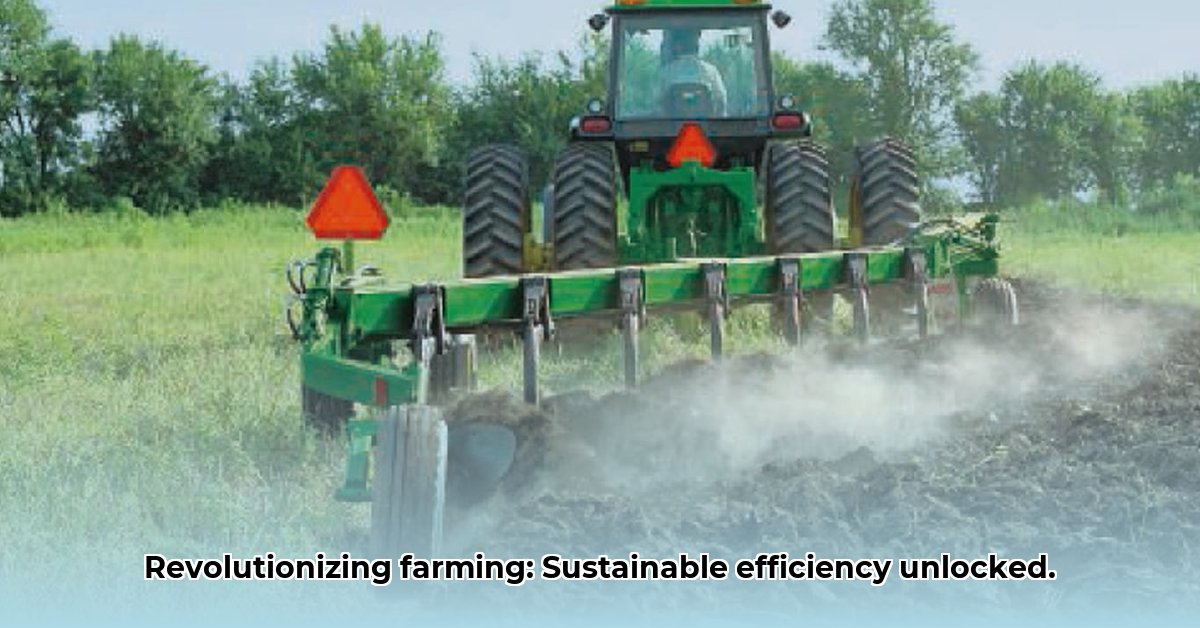
Tractor Plow Technology: A Modern Approach to Sustainable Farming
Modern agriculture faces the challenge of feeding a growing global population while minimizing environmental impact. Tractor plows, once synonymous with intensive farming, are undergoing a transformation, evolving to support both efficiency and environmental stewardship. This necessitates a careful balancing act between maximizing productivity and preserving soil health for long-term sustainability. How can we optimize agricultural practices to achieve both high yields and environmental responsibility? For additional tools to enhance your seeding process, consider exploring tractor seeders.
Tilling the Land: Balancing Progress and Preservation
Advancements in tractor plow design and farming techniques are enhancing efficiency while mitigating negative environmental consequences. However, the effectiveness of these advancements depends greatly on the specific practices employed and the soil type. Blind adoption of new technologies without adapting methods is unlikely to yield optimal results.
Advantages: Improved drainage and simplified seedbed preparation are key benefits, leading to reduced labor and time investment compared to manual methods. Furthermore, a wide variety of tractor plows caters to diverse soil conditions and farming needs.
Disadvantages: A significant trade-off exists between plowing depth and soil carbon storage. Deep plowing can disrupt soil structure, reducing its ability to sequester carbon, a crucial factor in mitigating climate change. No-till farming, avoiding plowing altogether, is gaining traction as a more sustainable alternative. Furthermore, the long-term effects on soil structure and erosion risk must be carefully considered. Plowing depth and plow type significantly influence these outcomes.
Stakeholder Analysis and Strategic Actions
The impact of tractor plow technology extends beyond individual farms, impacting various stakeholders:
| Stakeholder | Short-Term Goals (Next Year) | Long-Term Vision (3-5 Years) |
|---|---|---|
| Farmers | Soil health assessment; optimal plow selection. | Investment in precision tillage technology. |
| Equipment Manufacturers | Design of plows minimizing soil disturbance. | Development of more sustainable tillage solutions. |
| Policy Makers | Incentives for sustainable farming methods. | Funding research into low-impact plowing methods. |
Immediate Actions: Farmers should prioritize soil health assessments to guide plow selection. Manufacturers should focus on minimizing soil disturbance in plow design. Policymakers can incentivize the adoption of sustainable practices through targeted programs and funding for research into environmentally friendly methods.
Long-Term Strategies: Continued research into lower-impact soil preparation methods is crucial. Manufacturers should continuously refine plow designs for increased precision and reduced soil disruption. Governmental support for the transition to sustainable practices is essential.
The Future of Tillage: Sustainable Practices and Technological Innovation
The methods of soil tillage are constantly evolving. While improved tractor plows offer efficiency gains, the pursuit of sustainable agriculture continues. Research into no-till and conservation tillage is ongoing, with best practices likely to shift as our understanding advances. The long-term effects of various plowing methods on soil health and the environment remain subjects of ongoing study. This highlights the need for continued collaboration among farmers, researchers, and policymakers.
Selecting Sustainable Plow Technology for Enhanced Soil Health
Key Takeaways:
- Modern plowing technologies offer significant efficiency improvements, reducing costs and optimizing resource use.
- The impact of plowing methods on soil health is complex and remains a subject of ongoing debate. No-till and conservation tillage generally offer benefits, but intensive tillage might be advantageous in specific situations.
- Optimal plow technology selection depends on farm size, crop type, soil conditions, and budget. Larger farms may benefit from autonomous systems, while smaller operations may find simpler, cost-effective options suitable.
- Sustainable agriculture requires a holistic approach. Integrating precision agriculture data with advanced plowing technologies is critical.
- Collaboration among farmers, manufacturers, policymakers, and researchers is essential for the widespread adoption of sustainable plowing practices.
Choosing the Right Plow: A Practical Guide
- Needs Assessment: Define farm-specific requirements, considering crop types, budget, and soil characteristics.
- Technology Research: Investigate various plow types (moldboard, chisel, disc, no-till, autonomous, electric) and their respective advantages and disadvantages.
- Soil Data Analysis: Utilize precision agriculture data (soil maps, moisture levels) to optimize plowing depth and intensity.
- Pilot Testing: Conduct small-scale trials before large-scale implementation to assess performance and impact on soil health.
- Integrated Practices: Combine sustainable plowing with other soil health practices (crop rotation, cover cropping, reduced chemical use) for maximized benefit.
Stakeholder Collaboration: A Path Towards Sustainability
Farmers require efficient and affordable tools, manufacturers must develop sustainable options, researchers must investigate long-term impacts, and policymakers must support sustainable agriculture initiatives. This collaborative effort is essential for achieving a long-term vision of sustainable and innovative agricultural practices.